No products in the cart.

$0.00
Cart


A Guide to Choosing Packaging Size for Your Product
Why Bag Sizing Is Confusing for First-Time Buyers
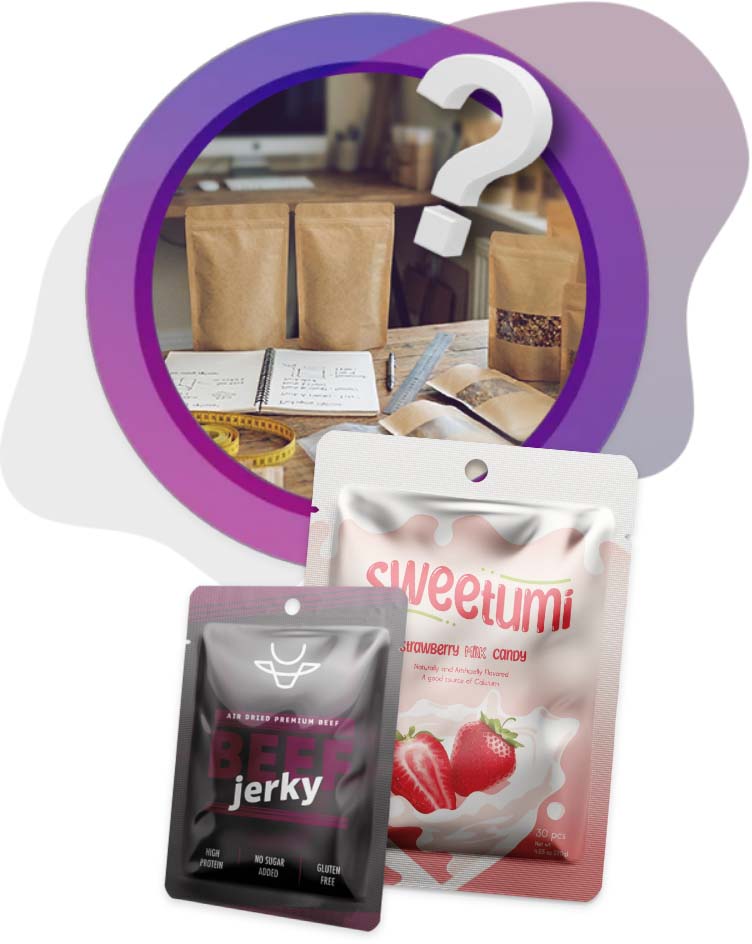
If it's your first time buying packaging materials and you feel completely lost in finding the right sized packaging, you aren't alone. Many of our first time customers struggle to optimize packaging and often find themselves with excess packaging waste or product dimensions that are totally off, especially if they are packaging irregular items or fragile products. This type of material waste can have a negative environmental impact, which is why finding the right sized eco friendly packaging options is so important.
Unfortunately, finding the sweet spot is tough. Simply put, finding the right packaging measurements for shipping boxes, particularly sustainable packaging, is not intuitive for new brands. But doing so can help you achieve certain business goals, enhance the customer experience, and decrease your carbon emissions. If you're looking for an efficient fit for multiple products, keep reading to learn more.
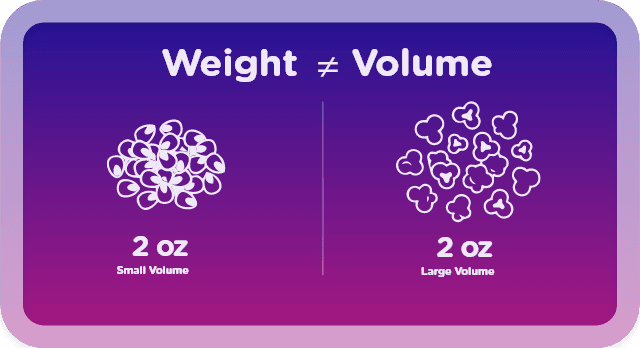
Weight ≠ volume, and density affects everything
This is an extremely common misconception when it comes to dimensional weight pricing and finding the right packaging dimensions. People are used to going to the store and buying Ziplock bags in quart or gallon sizes, which is easy and convenient for at-home use but not as part of the packing process for commercial products. Why? The volume of various products is different and must be accounted for in your packaging strategy. An example of this is popcorn kernels vs popped popcorn. Each has a different density that must be considered when purchasing packing materials.
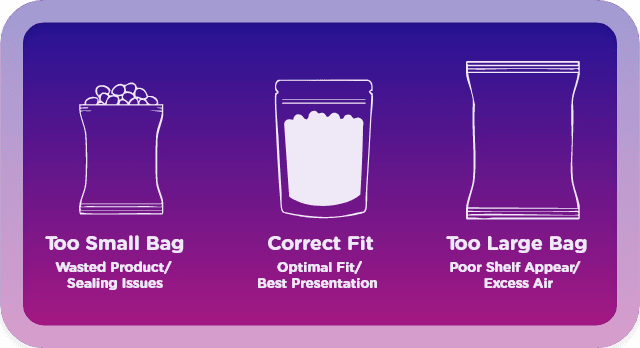
Incorrect sizing = wasted product, empty bags, and poor shelf presence
Most of the time, customers design their packaging size to be too small. Although it's seldom that customers make their packaging too big, both can be problematic. A bag that's too small and doesn't have enough space will lead to wasted product, and packaging that's too big means half empty bags and unhappy customers. In both instances, the shelf presence is poor and your bottom line and overall customer experience is impacted.
Length, Width, and Height — And Why Density Changes Everything
When it comes to volume and weight, you need to remember that density changes everything. "Ounces" or "grams" on packaging doesn't directly translate to bag dimensions because product density impacts how much space your product actually takes up. For example, two ounces of chips and two ounces of nuts require completely different packaging sizes. If you're having difficulty with this aspect of your packaging strategy, you aren't alone. A lot of our customers are challenged with this, and we're more than happy to help, especially if you're trying to find the right material and size for multiple items.
Pro Tip: Use Competitor Custom Packaging as Your Benchmark
If you're curious about product protection and want to avoid waste materials during packaging selection (i.e., be more eco friendly), we recommend buying competing products and measuring the bag yourself to find a starting size. After all, the packaging already meets customer satisfaction metrics and doesn't impact the shelf life of the product. This is the fastest (and cheapest) way to avoid sizing mistakes. Simply cut the bag open, flatten it fully, and measure length, height, and gusset. If you send us the length, width, and height or the bag dimensions, we can match competitor packaging dimensions exactly.
Connect with us today to get started with finding the right packaging choice that can help reduce costs and enhance your sustainable practices.
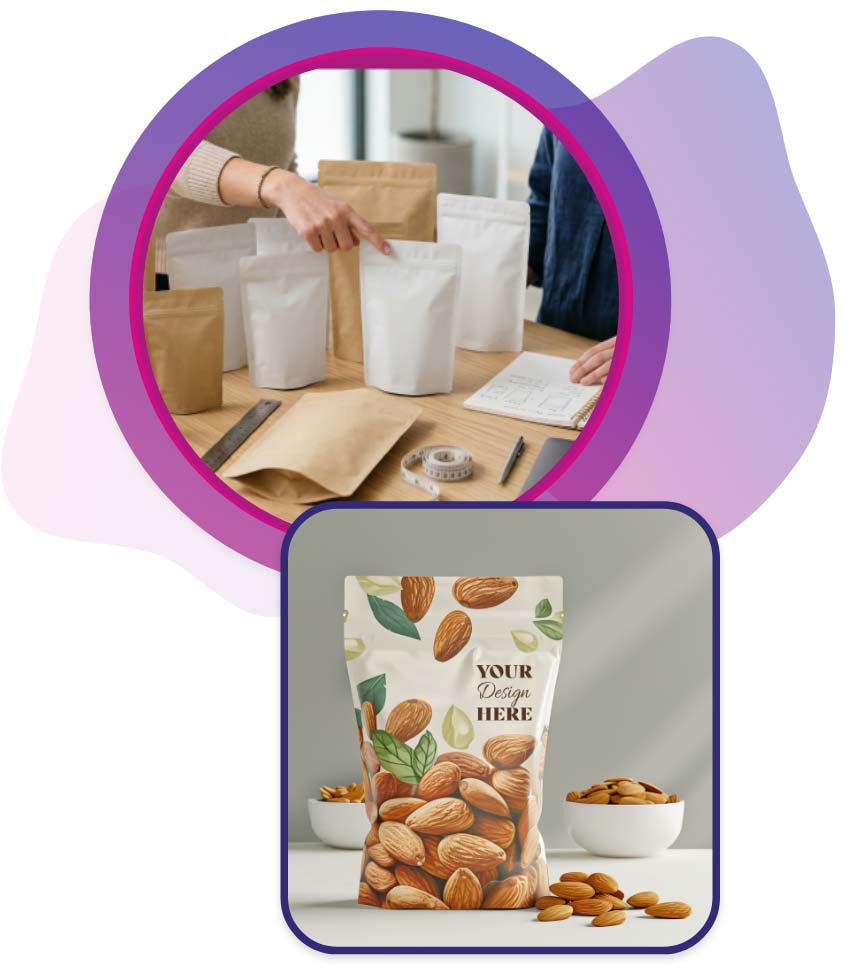
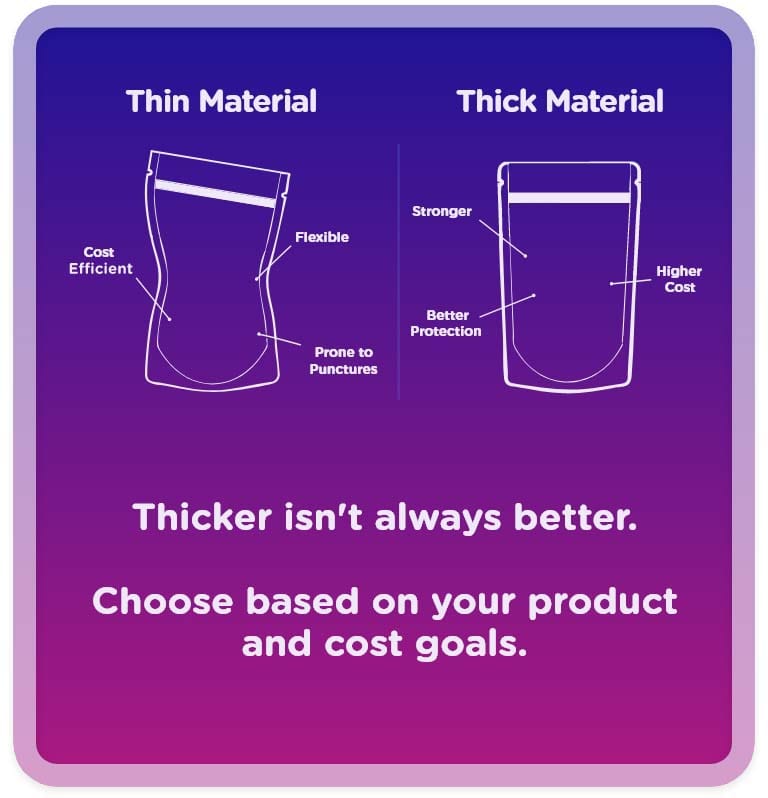
Visual Guide: Packaging Dimensions to Cut Costs
Thickness (mil or micron) affects how much stress a bag can handle. Thicker bags generally support heavier or sharper items, while thinner bags work well for more lightweight products. It's important to note that weight capacity also depends on packaging material and seam quality, not just on the thickness. Thinner bags are also more cost efficient, but more prone to punctures or tearing. Thicker bags provide more protection and structure, especially during shipping and handling. Thicker bags also feel sturdier and more premium, signaling protection and quality.
Just remember: thicker isn't always better. It means more cost and material, so the right choice depends on the product you're packaging and how badly you need to lower costs - not what the thickest or most premium option is.
Reality Check: Common Sizing Mistakes to Avoid
When it comes to improving your operational efficiency, here are some common mistakes to avoid:

Ordering way too big - We regularly see brands order 8" × 10" bags for a 2 oz product, only to realize the bag looks half-empty on shelf. Oversizing or the tendency to add extra space hurts product presentation and makes customers question the product safety and value.

Underestimating bulky or irregular shapes - Products that are airy, chunky, or uneven don’t settle neatly and typically requires a bigger bag than you think. Brands often size based on weight alone, then discover the product needs far more volume than expected.

Forgetting headspace - Food packaging needs room for sealing, freshness, and sometimes nitrogen flushing. Filling a bag edge-to-edge leaves no margin for proper closure or compliance, which can detract from product protection and decrease customer satisfaction.

Overfilling to “make it work” - Trying to force product into a too-small bag can compromise seal integrity, leading to leaks, failed drop tests, and higher returns. If you're seeking a minimal packaging look, you can achieve this by leaving extra space in the bag on purpose.
When to Get Expert Help (And Why It Improves Cost Efficiency)
If you’re guessing on bag size, thickness, or structure, you’re taking a risk—and packaging mistakes get expensive fast. CarePac helps brands size packaging based on real product samples, not assumptions. We test fit, recommend the right packaging dimensions and thickness, and make sure the bag performs the way it should.
We also match competitor bags, optimize material thickness for your specific use case, and help prevent costly misprints or reorders caused by sizing errors. Most importantly, we help you avoid ordering thousands of bags in the wrong size—saving time, money, and frustration.
Get expert sizing help — free with your first quote.
FAQs: Finding the Right Packaging
Lets Get Started
Made In
The USA

Full Pouch
Customization

Scalable Printing
Digital & Plate
Latest From The Blog
© 2025 CarePac. ISO 9001:2015 CarePac, Family Owned Flexible Packaging
Legal | Capabilities | Privacy