No products in the cart.

$0.00
Cart


How to Manage Lead Times for
Overseas Packaging
Why Lead Time Management Is So Hard for Growing Brands
Overseas packaging lead times and production times are rarely a single, linear countdown. In reality, they’re made up of multiple parallel timelines happening at once: artwork development and approval, supplier production, freight booking, customs clearance, and even co-packer scheduling on the receiving end. New and scaling brands often assume these steps happen one after another, when in fact many overlap and depend on each other to stay on track.
Because of that overlap, most delays in the packaging industry don’t start on the factory floor. They start much earlier. A late artwork revision, a missed proof approval, or a misunderstanding about print methods (like plate printing versus digital) can quietly stall everything. Once production is ready, shipping introduces its own variables: express air freight, fast ocean, or slow ocean options each have different timelines, costs per pound or kilogram, and duty or tariff considerations that vary by product and origin.
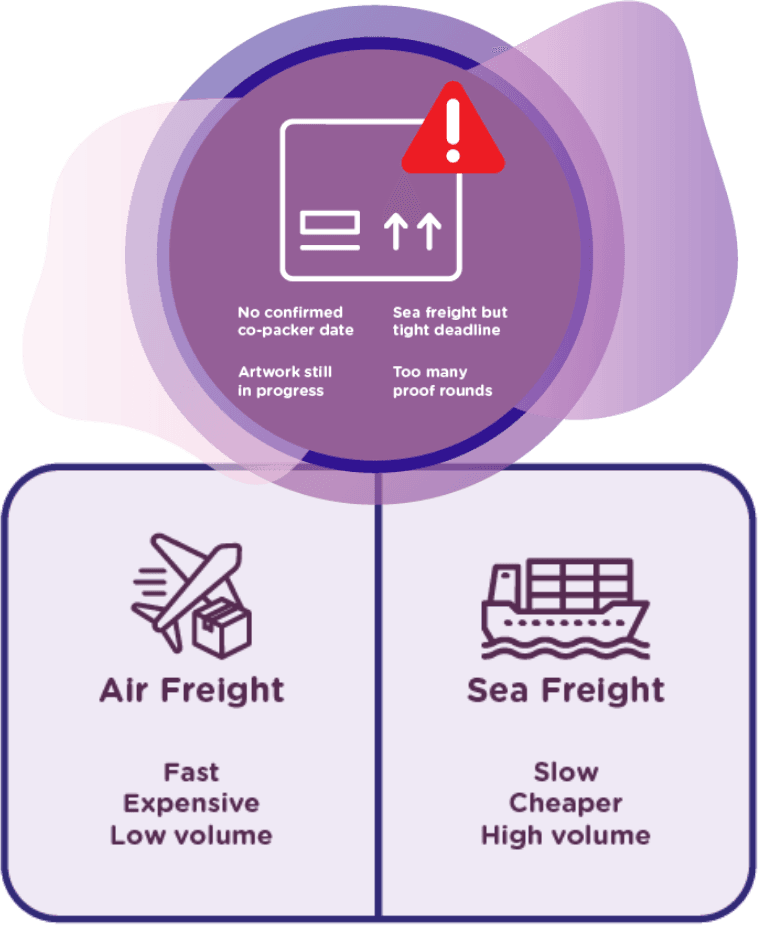

Then come the factors no supplier can control: weather disruptions across the Pacific, port delays or labor strikes, and multiple levels of customs inspection can all stretch timelines without warning. The key takeaway is simple: packaging lead time is not just manufacturing time, and even a small delay early in the process can ripple across the entire chain.
With experience managing these moving parts, CarePac helps brands identify risks early, align timelines realistically, and avoid the costly surprises that derail overseas packaging projects.
The Full Imported Packaging Timeline
If you're curious about what a typical timeline breakdown looks like, here's a step-by-step look at what you can expect at each phase.

Artwork prep - Here, your team will actually finalize a design and your final design is turned into a technical file that can actually be used to print your final packaging.

Proof approval - Unfortunately, many customers only notice errors the first time they look at an actual proof they have to sign. Fortunately, we catch a lot of errors that might not be caught by foreign producers because we speak English as a first language and engage in routine quality checks.

Production window - Timelines vary by the type of printing and style of bag and how busy the factory is. We offer three production schedules: express, standard, and economy. We try to group projects by type and how quickly customers need their packaging, and in doing so we're able to provide customers with lower prices through more efficient production.
Freight (air vs sea) - Overseas packaging can ship via express carriers, air freight, or several types of ocean shipping, with faster transportation options costing more. International shipments require a freight broker and a customs bond, and while vendors may recommend their own brokers, you remain the importer of record and responsible for any issues.

Customs clearance - Custom clearance can be a swift process or a long, laborious process. Customs may open up corrugated boxes and products can get lost in customs clearance stage.

Deliver to co-packer- Last mile delivery is often a logistical challenge because once it arrives in the United States, you have to get it to the final destination. The boxes your product comes in are not made of metal, and depending on the shipping method, they may arrive damaged.
As you can see, there are many stages to importing packaging from overseas and it's best to prepare for compounding potential delays (ex: if artwork is late, nothing can move forward).
How to DIY Overseas Packaging Lead Time Management (The Reality Check Guide)
If you do decide to do it on your own and aren't partnering with a local supplier like CarePac, here is a complete walkthrough of what brands must manage on their own. If it feels overwhelming, that's because it is. The complexity of handling this in-house cannot be underestimated and partnering with a company that understands the supply chain and focuses on customer satisfaction can give you a competitive advantage.
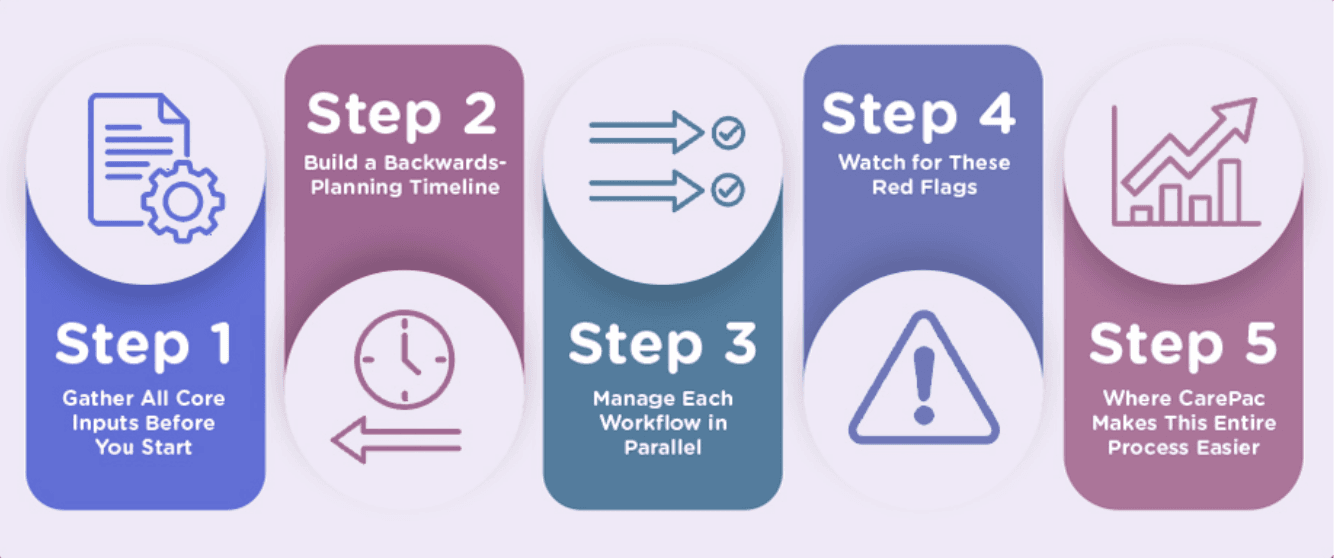

Step 1 — Gather All Core Inputs Before You Start
Before you can build a realistic overseas packaging timeline, you need to plan ahead and ensure all critical inputs are locked or clearly defined. This includes artwork status (not started, in progress, or press-ready), regulatory readiness (final formulation and completed FDA or compliance label approvals), your co-packer’s next available production window and blackout dates, supplier production lead times (often 4–8 weeks), chosen shipping method (air or sea with realistic transit times), and your true in-market target date. Miss even one of these details, and every downstream estimate becomes a guess—setting the project up for delays before it even begins.

Step 2 — Build a Backwards-Planning Timeline
The most reliable way to manage overseas packaging is to plan backward from your launch date. Start with the in-market date, then subtract shipping time (plus a 1–2 week buffer), supplier production lead time, proofing and revision cycles (often 1–3 weeks), and finally the time required to fully finalize artwork—often longer than brands anticipate. The key takeaway: if artwork isn’t press-ready when this chain begins, every downstream milestone shifts, and delays tend to add weeks, not just business days.

Step 3 — Manage Each Workflow in Parallel
Overseas packaging stays on schedule only when every workflow moves in parallel, not in isolation. That means locking in artwork readiness with clear file requirements, setting expectations for proofing and revision cycles, aligning co-packer availability with supplier production timelines, and making informed air vs. sea freight decisions early. Add in active customs clearance tracking and a consistent communication cadence across all vendors, and it becomes clear: on-time packaging depends on multiple parties moving in sync, not waiting on one another.

Step 4 — Watch for These Red Flags
Certain signals almost always indicate a delay is coming. If artwork is still “in progress” with less than 8–10 weeks before launch, the co-packer can’t confirm a run date, or regulatory labels aren’t finalized, timelines are already at risk. Choosing sea freight against tight retail deadlines or planning for multiple proofing rounds are additional warning signs that packaging may miss its target date.

Step 5 — Where CarePac Makes This Entire Process Easier
CarePac helps brands gut-check their assumptions and validate timelines before costly mistakes are locked in. We guide clients through backward planning to keep launch dates realistic, drawing on experience that shows artwork and proofing are almost always underestimated. By centralizing communication between suppliers, co-packers, and designers, CarePac reduces misalignment and risk—making the process far more efficient than DIY, which is possible but time-intensive, easy to misjudge, and prone to delays.

Final Thoughts: Plan Early, Communicate Often, and Don’t Go It Alone
Managing overseas packaging lead times is one of the biggest operational challenges brands face, because even small delays early in the process ripple across every step. The key to staying on track is to start earlier than you think, keep all parties aligned, engage in open communication, and actively manage every parallel workflow. While it’s possible to do it yourself, working with an experienced partner like CarePac can save time, reduce stress, and prevent costly delays—reach out for guidance or support to make your next launch smoother.
Start your journey on the right foot. Talk with a packaging expert today!

FAQs: Overseas Packaging Lead Times
Lets Get Started

Made In
The USA

Full Pouch
Customization

Scalable Printing
Digital & Plate
Latest From The Blog
© 2025 CarePac. ISO 9001:2015 CarePac, Family Owned Flexible Packaging
Legal | Capabilities | Privacy