No products in the cart.
$0.00
Cart

What to Know Before Ordering 10,000+ Custom Pouch Bags
Ordering Custom Pouches in Bulk
As you already know, a lot more is on the line with high-volume, bulk orders than with smaller quantities. At this volume, mistakes are expensive and a wrong film spec, an artwork or design file that isn't production-ready or a missed lead time window doesn't just cost companies a few hundred dollars - it costs you weeks, hundreds of thousands of dollars and potentially a production shutdown.
In this blog, we'll walk you through what you need to know before you order 10,000+ custom pouches, so you're happy with the finished product.
Lock In Your Stand Up Pouch Specs Before You Request a Quote
At 10,000+ units, every decision is a cost decision, so it's beneficial to be confident in your choices. From whether to use sustainable materials to whether to include resealable zippers or tear notches, there's a lot to consider. In this section, we'll walk you through the five things that must be finalized before a quote can be accurate and explain why each one matters at scale.
1. Format and Size
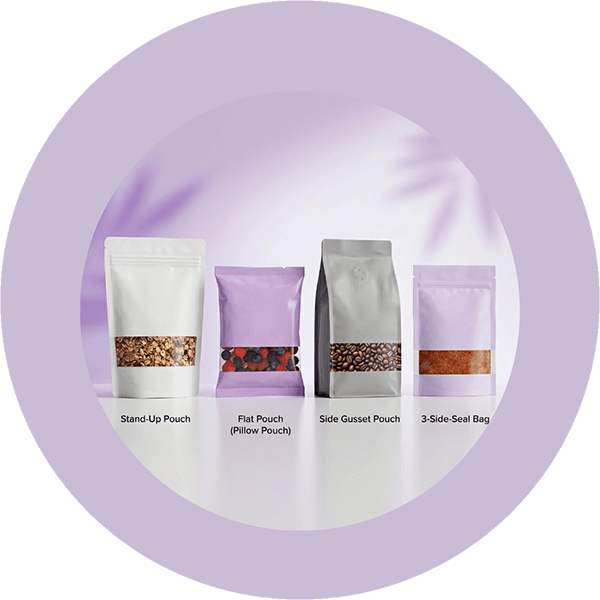
Before you worry about the specifics of your packaging, you'll need to decide on which pouch configuration you need. Popular options include stand-up pouches, flat pouch, side-gusset, and 3-side-seal bags. Dimensions are always listed as width x height x gusset, and fill volume (not product weight!) determines the right size. Since a wrong size at 10,000+ units means 10,000+ unusable pouches, we recommend ordering samples from our website if there's any doubt.
2. Film and Barrier Structure
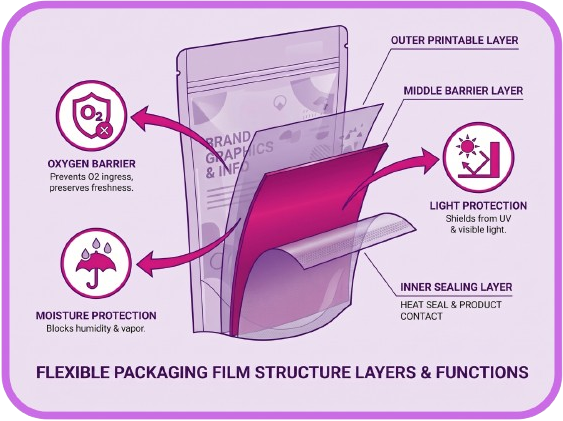
This is the area where most high-volume buyers underspec. The film you choose determines barrier performance, print quality, finish options, and shelf life. These are extremely important considerations if you're packaging food, powders, or liquids that can leak or spoil while in transit and storage. Here's a quick breakdown:
3. Features and Closures
Depending on what you're packaging and shipping, you might need to customize special features or closure options into your pouch, including zippers, hang holes, tear notches, degassing valves, or a window. Each feature adds to the unit cost, and some (such as child-resistant zippers) may be required for compliance. At 10,000+ units, you should know exactly which features you need before ordering, as changing a specification or feature mid-quote adds time.
4. Quantity and SKU count
Are all 10k units one SKU, or are SKUs split across multiple sizes and designs? Because multiple SKUs at the same spec can often be consolidated into a single production run, buyers should ask about this before finalizing their order. Different specs mean separate runs and separate pricing.
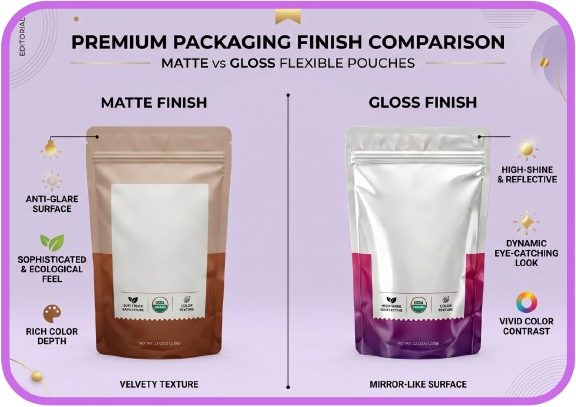
5. Finish
This is the fun part! Once you've settled on a format, size, material, barrier structure, and special features, you can decide which finishing touches to add to your bag. From matte and gloss to soft-touch and holographic finishes, the finish affects both the appearance and per-unit cost of your bags. Again, this should all be confirmed before the artwork file is made and finalized.
Your Artwork File Needs to Be Print-Ready Before You Order Pouches
Artwork delays are the single most common reason large orders run late. At 10k+ units, the print process differs from a digital short run, and files that "look fine" in a design app will fail in production if they're not set up correctly. In this section, we'll walk you through what "production-ready" actually means so you can brief your designer correctly before submitting your files.
File Format
Adobe Illustrator (.ai) is the standard. PDFs are acceptable if saved correctly. We do not accept Canva exports or low-resolution JPEGs. Supplying the correct file type helps avoid production delays and ensures that your artwork is processed accurately by our prepress team.
Use the Dieline
We provide downloadable dieline templates for every pouch format and style. The artwork must be built on the correct dieline with the front, back, and gusset panel details laid out accurately. Using the proper template ensures that graphics, text, and packaging features align correctly once the pouch is formed and sealed.
Resolution
All embedded images must be 300 dpi CMYK. Vector art (logos, text, line graphics) must be outlined and linked correctly. Low-resolution artwork may appear blurry or pixelated in print, especially on larger pouch formats or high-volume production runs. If you need help, we offer design support.
Color Mode
CMYK throughout. Any Pantone/PMS colors should be explicitly called out. RGB files will shift in print at 10k units; that shift is locked in. Converting files to CMYK before submission gives you a more accurate representation of how colors will reproduce on the final package.
Bleed and Safe Zones
Artwork must extend beyond the cut line (bleed), and critical elements, text, and business logos must remain within the safe zone. Getting this wrong at scale means reprints. Even slight movement during cutting or pouch conversion can affect placement, so following bleed and safe zone guidelines is essential for professional results.
White Ink Layer
If you're ordering on clear film, a white ink base layer is required in the file. This is a common miss for buyers new to clear film. Without a properly defined white ink layer, colors can appear translucent, muted, or different from expected when printed on transparent material.
Hidden Layers
Remove all unused or hidden layers before submitting. Production teams work from the file as submitted. Cleaning up your file reduces the risk of unintended artwork appearing in production and helps streamline the prepress review process.
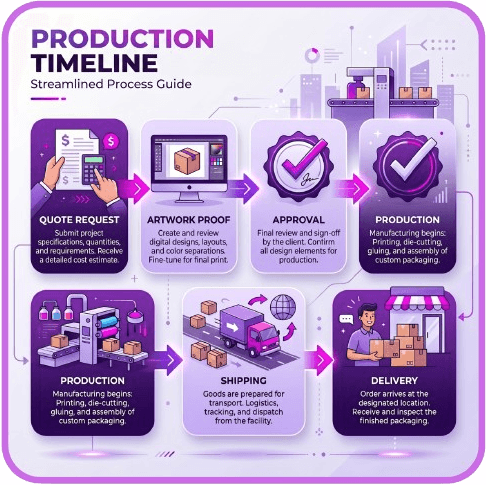
Plan Around Lead Times Especially for First Runs
Lead time is the most misunderstood element of a large pouch order, especially for buyers who have only done short digital runs before. In this section, we'll help you set realistic expectations and explain what affects lead times so you can plan your production calendar correctly.
Compliance Requirements That Affect Your Pouch Order
Compliance issues discovered after production are extremely expensive. Though there are a wide range of compliance requirements your packaging will need to meet depending on your industry, here are some of the most common compliance areas we run into:
Food-contact compliance: Any pouch used for food products must be made from FDA CFR-compliant materials. CarePac's materials are FDA CFR 73, BPA-free, and phthalate-free. Buyers should confirm that this is documented on their order before checkout.
Child-resistant requirements: Child-resistant packaging requirements for cannabis, supplements, detergent pods, and other potentially hazardous products vary by state and category. Buyers need to know their requirements before specifying features. Important note: Child-resistant zippers are not interchangeable with standard zippers.
Kosher/TSE/other certifications: Some buyers' customers or retail partners require specific material certifications. CarePac materials are Kosher and TSE-free, but buyers should confirm what their retailer or co-packer requires and verify against their spec sheet.
Sustainability/recyclability claims: If the buyer intends to print recyclability claims on the pouch, the film structure must support those claims. Confirm the film certification before finalizing artwork printing, as a claim on a non-certified structure creates a compliance liability.
What to Have Ready When You Request a Quote from CarePac
Before requesting a quote, make sure you've confirmed the key details of your project. That includes your pouch format, finished dimensions based on fill testing, film structure and barrier requirements, desired features such as zippers, tear notches, valves, windows, hang holes, and finishes, as well as your total order quantity and number of SKUs. You should also know whether your artwork is production-ready on the correct dieline or if you'll need design support; your required in-hands date and preferred lead time tier; and any compliance requirements, such as FDA, child-resistant, or recyclability.
Once you have those details, you're ready to request a custom packaging quote. Visit CarePac's quote page to submit your project requirements and receive pricing tailored to your specifications. If you still have questions about pouch formats, materials, artwork setup, or production timelines, schedule a free consultation with the CarePac team and get expert guidance before you're ready to quote.
Frequently Asked Questions
Lets Get Started
Made In
The USA
Full Pouch
Customization
Scalable Printing
Digital & Plate
Latest From The Blog
© 2025 CarePac. ISO 9001:2015 CarePac, Family Owned Flexible Packaging
Legal | Capabilities | Privacy