No products in the cart.
$0.00
Cart

Doypack Configurations: What They Are & When to Use Them
Intro to Doypack Plastic Packaging
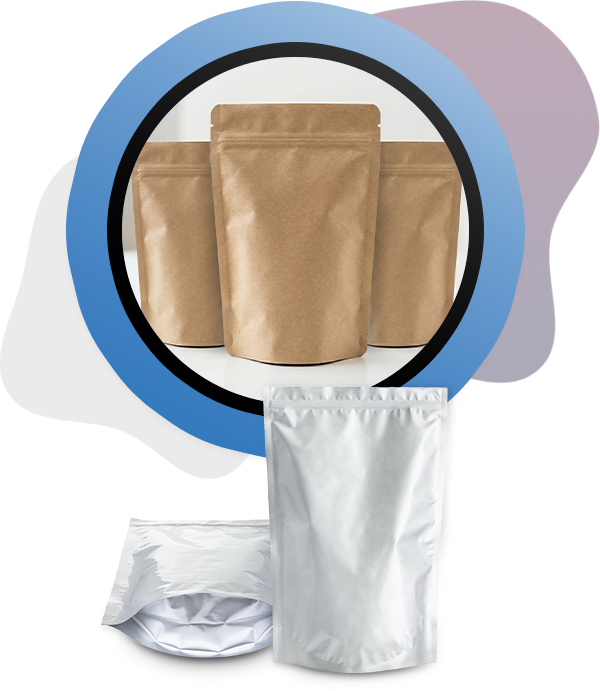
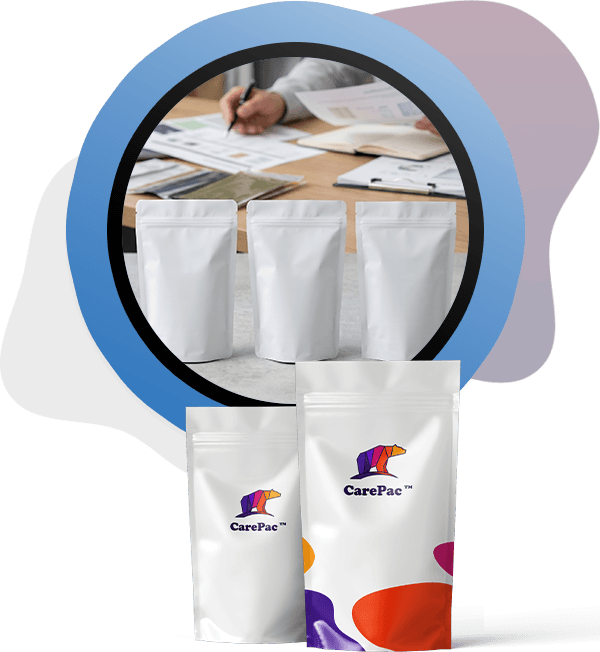
A doypack stand up pouch is one of the most widely used flexible packaging formats in the world. Known for its curved bottom gusset and ability to stand erect on store shelves, this pouch style is popular for products ranging from snacks and coffee to pet food and supplements.
Doypacks are one of several stand up pouch configurations used in flexible packaging. Understanding how they compare to alternatives like plow bottom pouches and K-Seal pouches can help brands choose the right format for their product, filling process, and shelf display needs.
Originally developed in 1963 by French inventor Louis Doyen, the doypack design consists of two flat sheets sealed along the sides with a rounded gusset at the bottom. Today, billions of doypacks are used globally each year because they provide an excellent balance of cost efficiency, shelf presence, and packaging performance.
In this article, we'll explain how doypack packaging works, when they’re the best option, and how they compare with other common standing pouch structures.
Key Features of Doypack Flexible Packaging
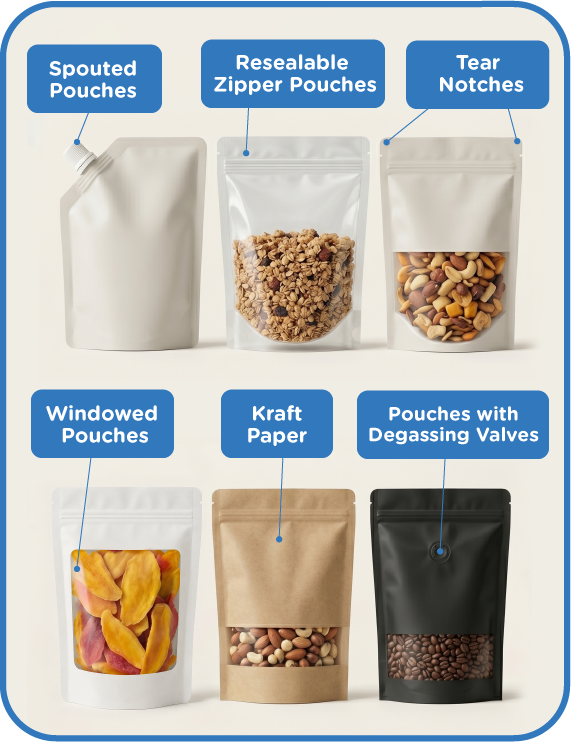
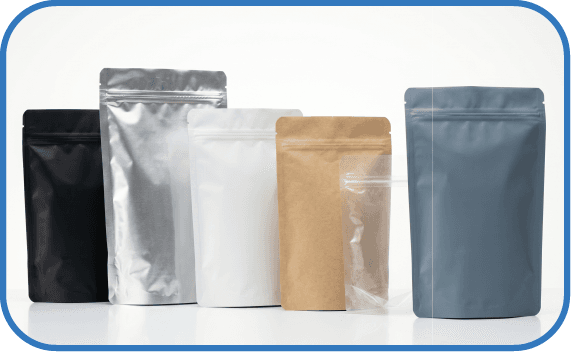
One of the key advantages of a doypack pouch is its flexibility in design and functionality. Manufacturers can customize these pouches to match specific packaging needs and branding goals. They can be manufactured in different shapes and various sizes and can also be made from eco friendly materials.
Common doypack configurations include:
Because the structure of these packaging solutions are relatively simple compared to other stand up pouch designs, doypacks work well across a wide range of industries while remaining cost-effective to manufacture and fill.
Common Applications of Doypack Packaging Solutions
Doypack pouches appear in nearly every business and retail category because they offer a good balance between protection, presentation, and cost. They also have a lesser environmental impact than some other packaging solutions.
Liquids
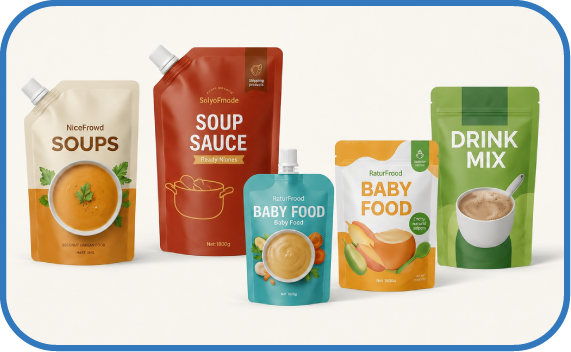
Spouted doypacks are commonly used for products like soups, sauces, baby food, and drink mixes. Compared to rigid containers, flexible pouches reduce shipping weight and storage space.
Pet Food
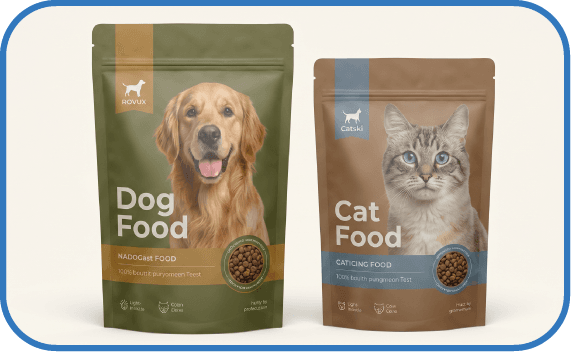
Fresh pet food brands frequently use doypack pouches because the sealed barrier films help protect against moisture and oxygen exposure.
Snacks, Coffee, and Confectionery
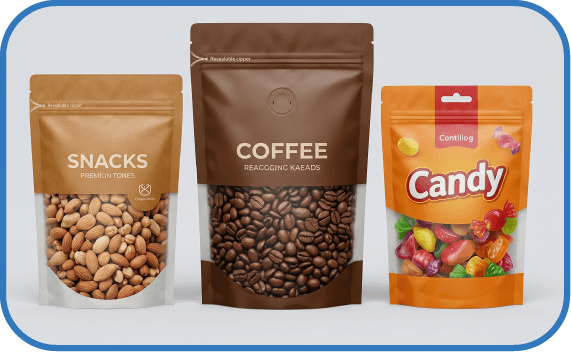
Many snack brands choose doypacks because the resealable zipper keeps nuts, supplements, and other products fresh after opening. Coffee brands also use doypacks with degassing valves to release CO₂ produced by freshly roasted beans.
Doypack Pouches vs Other Stand Up Pouch Configurations
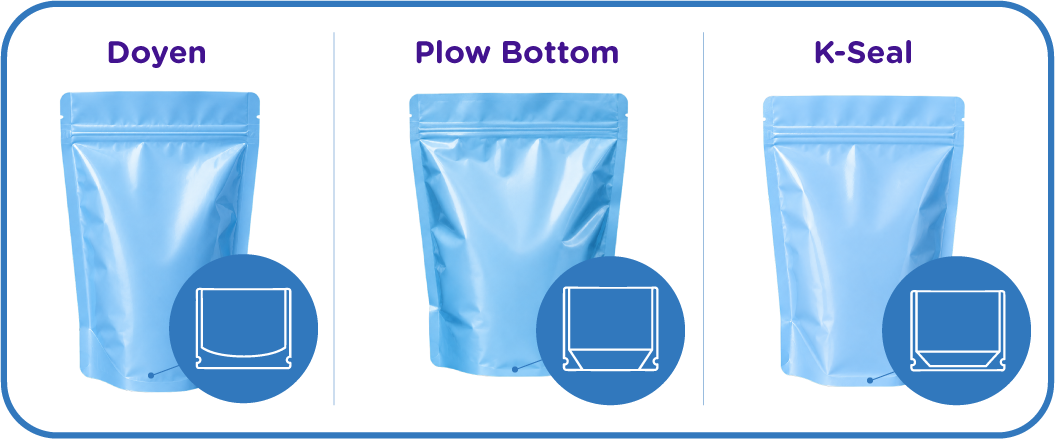
While doypacks are extremely common, they are not the only stand up pouch option available. Other popular configurations include plow bottom pouches and K-Seal pouches.
Each structure has advantages depending on the product weight, filling method, and retail presentation.
Feature | Doypack (Doyen Seal) | Plow Bottom Pouch | K-Seal Stand Up Pouch |
|---|---|---|---|
Bottom Construction | Rounded bottom gusset (U-shaped seal) | Fold-over bottom with simple cinches forming a gusset | Angled bottom created by angled seals |
Stands on Shelf? | Yes, generally acceptable | Only with powder or granular products | Yes – most stable |
Shelf Stability | Good for most products | Depends on product density | Excellent (most stable) |
Visual Shape | Soft, rounded base | Pillow-like | lat base with angled corners |
Blow Outs | Balanced performance | Usually lowest with powder products | Heavy products may experience blow outs due to gusset complexity |
Premium Look | Moderate | Lower | High / premium |
Common Use Cases | Coffee, tea, snacks, pet food | Powder products, granular snacks | Snacks, supplements, premium food |
Wrinkle Resistance | Moderate | Moderate to low depending on fill | Highest |
Fill Tolerance | 4 star | 5 star | 3 star |
Cost (Relative) | $$ | $ | $$$ |
Best For | General use stand-up packaging | Heavy powder products | Premium shelf presentation |
Alternate Names | Doyen pouch, doypack | Square bottom pouch, flat bottom pouch | K-Seal pouch |
Benefits of a Doypack Bags
Doypack pouches are popular because they strike a balance between cost, performance, and shelf display in the market. When compared to other stand up pouch structures, several advantages stand out for both consumers and businesses.
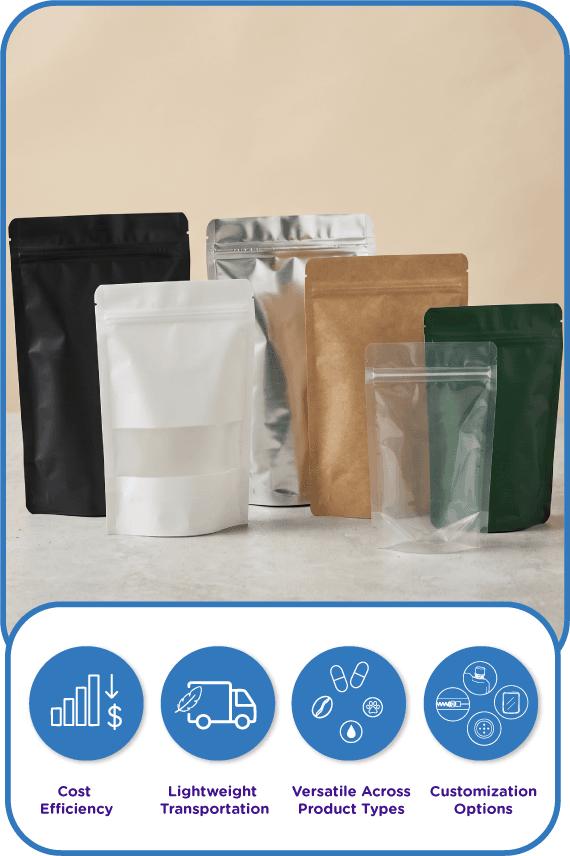
Cost Efficiency
Compared to K-Seal pouches, doypacks typically use less material and require simpler sealing patterns. This often makes them more economical for brands scaling production.
Lightweight Transportation
Like most flexible packaging formats, doypacks are extremely lightweight. Compared to rigid containers, they reduce shipping costs and warehouse storage space.
Versatile Across Product Types
Compared to plow bottom pouches, doypacks perform better across a wider range of products. While plow bottom structures work best for powders or granular fills, doypacks can handle liquids, snacks, coffee, supplements, and pet food.
Customization Options
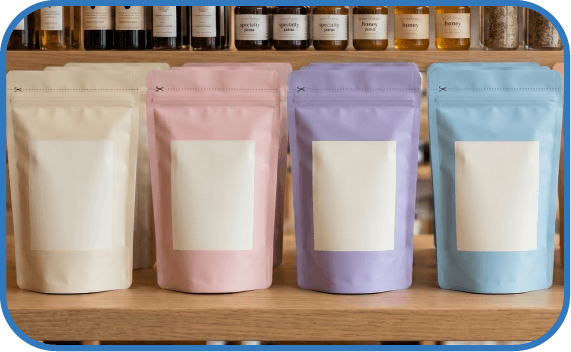
Doypack pouches can include a wide variety of features, including:
This makes them adaptable for both retail and e-commerce packaging.
How to Choose the Right
Stand Up Pouch for Your Product
Choosing the right pouch configuration depends on several factors including product weight, fill method, and how the product will appear on the shelf.
Choose a Doypack if:
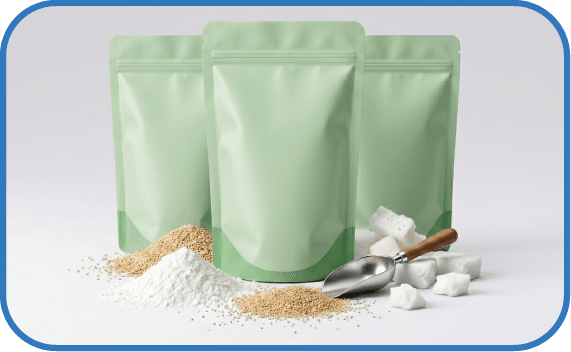
Choose a Plow Bottom Pouch if:
Choose a Doypack if:
CarePac: Your Stand Up Pouch Packaging Partner
Choosing the right pouch configuration can significantly impact product protection, shelf presentation, and packaging costs.
If you're unsure which stand up pouch style is right for your product, our team can help you evaluate the best option based on your product type, filling method, and retail goals.
Not sure which stand up pouch configuration is right for your product?
Our packaging experts can help you compare doypack, plow bottom, and K-Seal pouch options before you commit.
Get started with a quote today.
FAQ: Doypack Stand Up Pouches
Lets Get Started
Made In
The USA

Full Pouch
Customization

Scalable Printing
Digital & Plate
Latest From The Blog
© 2025 CarePac. ISO 9001:2015 CarePac, Family Owned Flexible Packaging
Legal | Capabilities | Privacy