No products in the cart.

$0.00
Cart

The Realities of Ordering Packaging From China (What Experienced Brands Already Know)
Why So Many E-Commerce Brands Start With Chinese Companies— And Why They End Up Switching
For many e commerce brands, especially those who are just getting their feet wet in the packaging industry, starting with overseas packaging suppliers in China makes complete sense. Between lower costs per unit, wide material options, and massive production capabilities, overseas manufacturing does have some advantages, particularly if you're scaling fast or focused on cost savings. And to be clear: overseas vendors CAN deliver great results and reduce costs, but the production process can quickly break down, especially as your business needs change or grow.
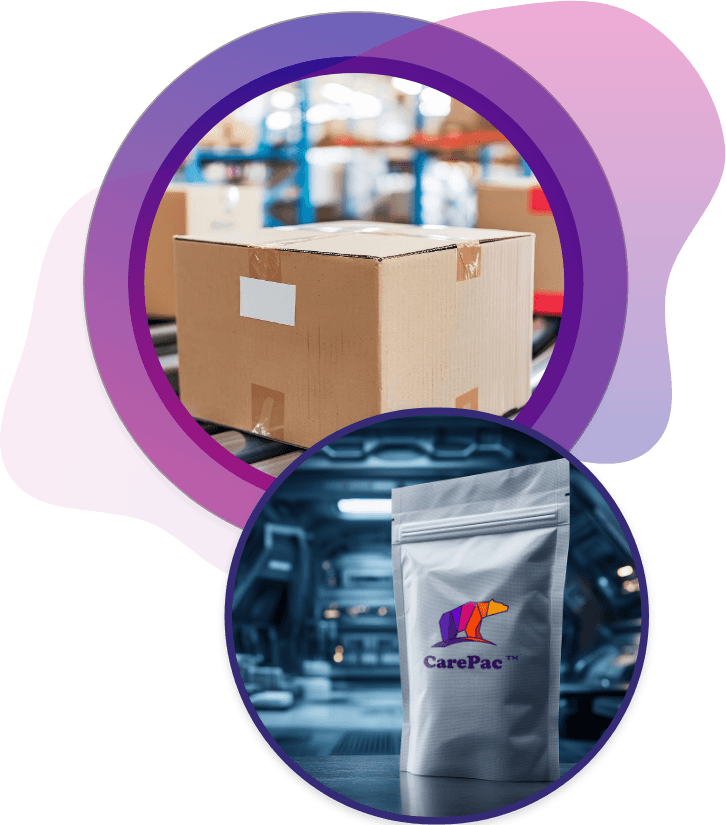
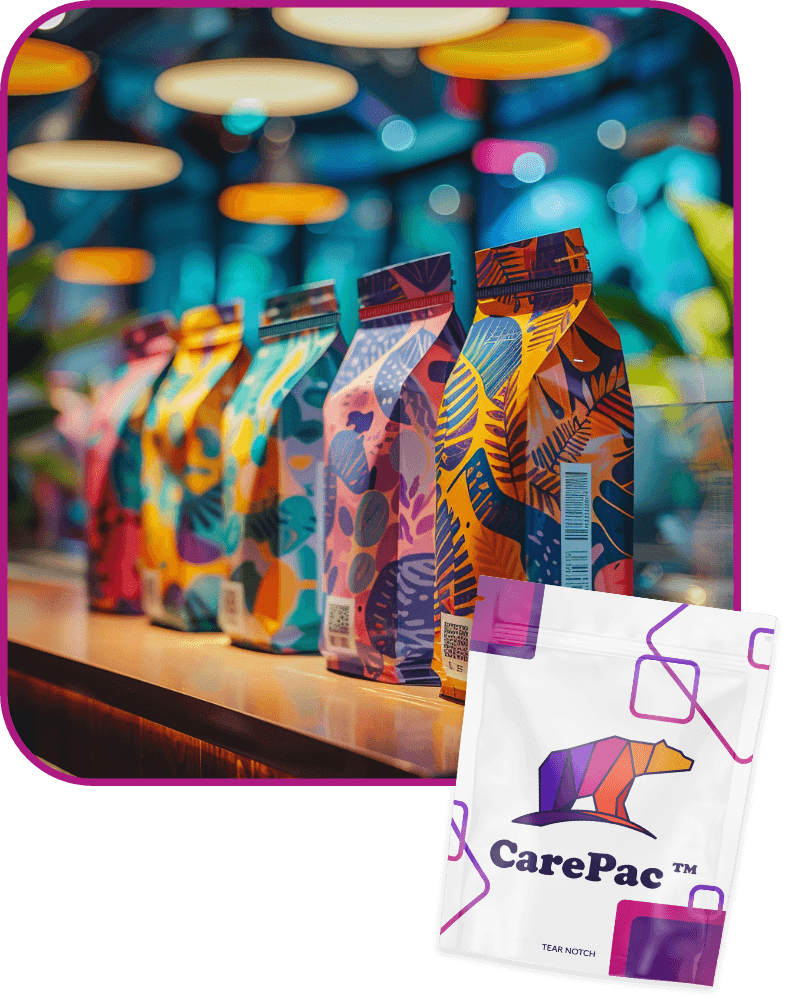
As product packaging orders grow more complex, brands can run into critical communication issues, long response times, shifting product offerings, and quality control concerns. Small changes can turn into big delays and proofs often get misinterpreted. Logistics timeliness slip and, when something goes wrong, it's hard to course correct from halfway around the world. Between destination time zones and language barriers, working with Chinese suppliers isn't always the best choice in the industry.
If you're looking for a different kind of manufacturing partner, CarePac can help. Many of our clients turn to us after experiencing the growing pains outlined above. Not because their overseas supplier was "bad", but because they wanted tighter oversight, clearer communication, and a reputable supplier who deeply understands the intricacies of branded packaging.
If you're curious about what downsides to expect when outsourcing your branded packaging overseas, here is some detailed information about what you can look out for. If you have specific questions about the various advantages working with us can offer you, contact us today to learn more.

Pain Point #1 — Quality Inconsistency (Even After Approving Product Packaging Proofs)
If you've ever opened pre production samples and thought "This isn't what I approved", you aren't alone. It's not uncommon for there to be inconsistency in the product or components, even after approving the essential packaging proofs. The root cause isn't carelessness or volume. It's the reality of overseas production without premium hands-on oversight. Materials are often swapped based on availability, and different machinery is used from one run to the next. Without someone keeping an eye on the specs or dimensions during production, small deviations can quickly add up into big problems.
If this happened to you, it doesn't mean you chose the wrong supplier or didn't do your homework. It just means the production process lacked the controls needed to ensure consistency at scale.

Pain Point #2 — Miscommunication, Quality Control Issues, & Time Zone Delays
Most businesses don't understand how fragile the production process is until something goes wrong. Artwork gets misunderstood, bag sizes aren't quite right, and simple questions take days to get answered. On paper everything looks fine, but technical packaging details leave a lot of room for interpretation, especially with language barriers and time zones to contend with. One of the things our customers rely on us for is translation. Not just of language, but of the entire packaging process. We'll explain what decision matters and will call out issues before they turn into expensive surprises.
If you've felt stuck waiting for replies or blindsided by decisions you didn't know where being made, these issues are for more common than most small businesses realize.

Pain Point #3 — Production Delays, Freight Surprises & Missed Launches
When brands plan packaging around overseas production, timelines can look solid at first. Then the scope creep begins. Production slips a few days, and those days turn into weeks. Before you know it, your freight schedules shift and your launch date is completely unknown. Much of this is predictable. Although China runs on a six-day work week, this is balanced by a few large, extended holidays when the entire country shuts down completely. Golden Week, Chinese New Year, and National Week aren't minor slowdowns - they are complete stops. This, coupled with port congestion, port slowdowns, labor strikes, inspections, and paperwork errors can all add unpredictable delays.
These aren't rare cases; they are patterns. And once you've missed the launch window, the cost isn't just higher freight or delayed packaging. It's lost momentum, lost revenue, and a detriment to your brand identity.

Pain Point #4 — Hidden Costs That Make Overseas Packaging Suppliers Not-So-Cheap
On the surface, overseas pricing often looks unbeatable. The unit cost is low, the quote is clean, and everything feels efficient. That is, until the real production costs start showing up. One of the biggest hidden costs is shipping container duties and tariffs. Historically, these were relatively minor but today they've spiked as high as 157%. Then there's sea freight brokerage fees and custom bond requirements, which most first-time importers don't even think about. Replacement and reprint costs are another harsh reality. When production runs late, brands often end up paying for air freight upgrades just to hit launch date.
These product packaging costs don't show up in the initial quote. But together, they're why so many brands eventually realize that overseas manufacturing isn't cheaper - it's just harder to see the full price until it's too late.

Pain Point #5 — No Accountability When Something Goes Wrong
This part is uncomfortable, but it's important to note. When you wire money overseas, there's no rewind button. When errors happen, many companies simply end up eating the cost. While some suppliers suggest there are remedies, we have very rarely seen true accountability play out in practice. Communication often degrades at this stage, too. Responses slow down and messages go unanswered. A common quality issue we see involves non-functioning degassing valves. Suppliers will often offer a partial credit, but only after you send physical samples back for verification.
None of this is surprising if you've lived through it, and it's exactly why so many brands eventually decide they need a partner who's accountable, available, and standing on the same side of the transaction when something goes wrong.

Pain Point #6 — Compliance Issues (FDA, Labeling, Claims)
Compliance problems are rarely obvious until they are suddenly urgent. Brands come to us after discovering issues like incorrect weight formatting, allergen statements placed incorrectly (or completely missing), and required material disclosures that are ignored or misrepresented. These aren't design details, they are specific requirements and not meeting them can put your brand in hot water.
None of this means overseas manufacturing is automatically non-compliant. But it does mean the burden of compliance will almost always fall on you. Without a partner that actively checks labeling rules, material disclosures, and facility standards, it's easy to end up with packaging that looks good but can't legally be used, leading to packaging waste that can be detrimental to e commerce brands.
How CarePac Helps Switch Buyers Transition Smoothly
If you're switching suppliers, it's usually because you've dealt with enough headaches. The last thing you want is another complicated transition. That's where we come in. CarePac is built for brands that are mid-stream; already selling, scaling, and ready for packaging that simply works. Communication is fast and because we're U.S- based, questions get answered in real time and issues are resolved quickly. We take a hands-on approach to artwork and file checks, which means fewer assumptions, fewer interpretations, and far fewer surprises when the bags arrive. What you approve is what you receive.
We also support lower MOQs, which gives growing brands flexibility without forcing massive upfront costs onto them. Our onboarding process is clear and guided, designed specifically to avoid downtime while you transition away from your existing supplier.
Final Takeaway — Overseas Isn’t “Cheap” If It Costs You Time, Quality, or Credibility
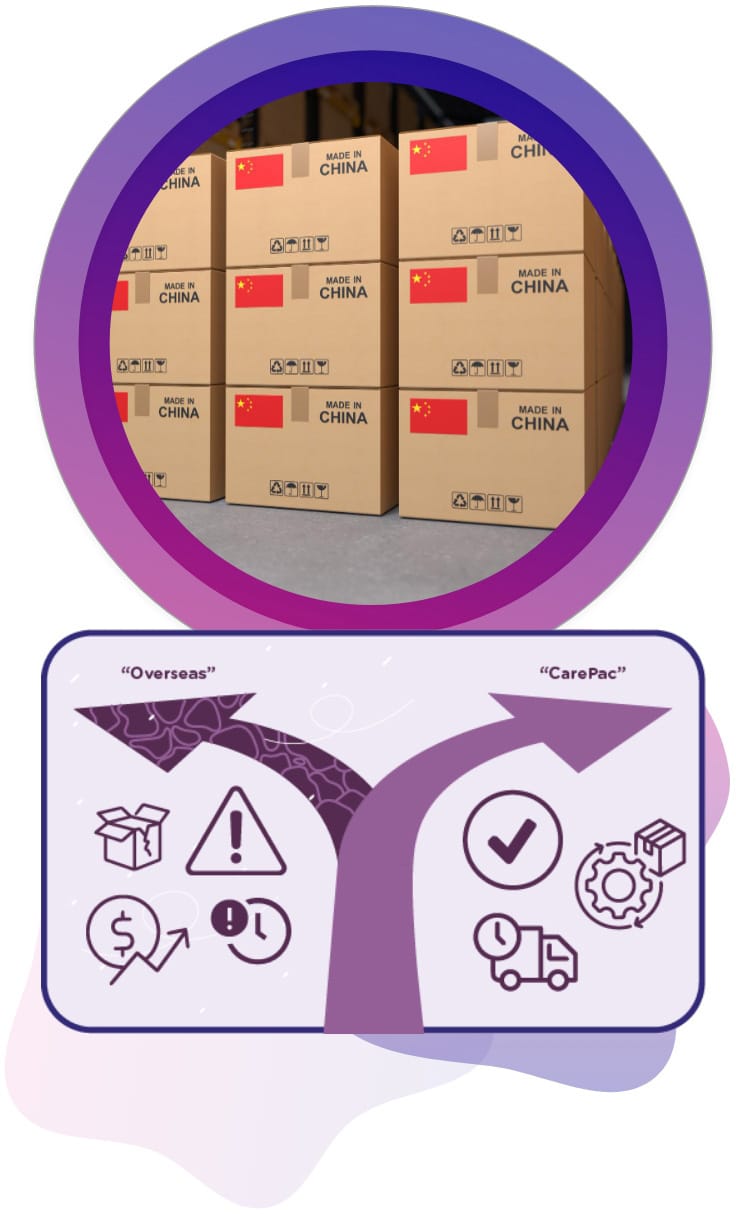
For many brands, the journey follows a specific type of pattern. Overseas manufacturing works—until it doesn’t. Early savings get offset by quality inconsistencies, miscommunication, missed timelines, surprise costs, and compliance concerns. What starts as a smart cost-saving move slowly turns into a drain on time, focus, and trust—both internally and with your customers.
Most brands don’t switch because of one big failure. They switch after a series of small, avoidable problems that add up. Delayed launches. Reprints that shouldn’t have been necessary. Inventory you can’t use. Stress you didn’t plan for. At a certain point, the question stops being “Is this cheaper?” and becomes “Is this sustainable?”
If you’re ready for packaging that’s predictable, accountable, and built to support your growth—not complicate it—there is an easier path forward.
Curious what a stress-free switch looks like? Get expert guidance with your first quote.
Lets Get Started
Made In
The USA

Full Pouch
Customization

Scalable Printing
Digital & Plate
Latest From The Blog
© 2025 CarePac. ISO 9001:2015 CarePac, Family Owned Flexible Packaging
Legal | Capabilities | Privacy