No products in the cart.

$0.00
Cart


Costs to Watch for When Ordering Packaging From Overseas
Why Overseas Packaging Looks Cheaper (Until You Add Everything Up)
While overseas packaging might seem appealing initially, the lower unit price, high-volume factors, and tempting MOQs come with hidden costs and fees nobody likes to talk about. Many bands only budget for per-unit cost and ignore everything else, but it's important to note that ordering packaging materials overseas can be more expensive than purchasing domestically once all the fees are included. These fees including customs forms, international shipping costs, insurance (especially for fragile items), international shipment delays, and inventory loss.


If you're considering shipping overseas packaging materials to your destination country, here are some hidden costs to watch for when ordering packaging overseas. From customs forms to shipping fragile items internationally with bubble wrap, this comprehensive list can help you manage your expectations and decide if purchasing packaging overseas is right for you.
Cost #1 — Freight Costs (and Why They Fluctuate Constantly)
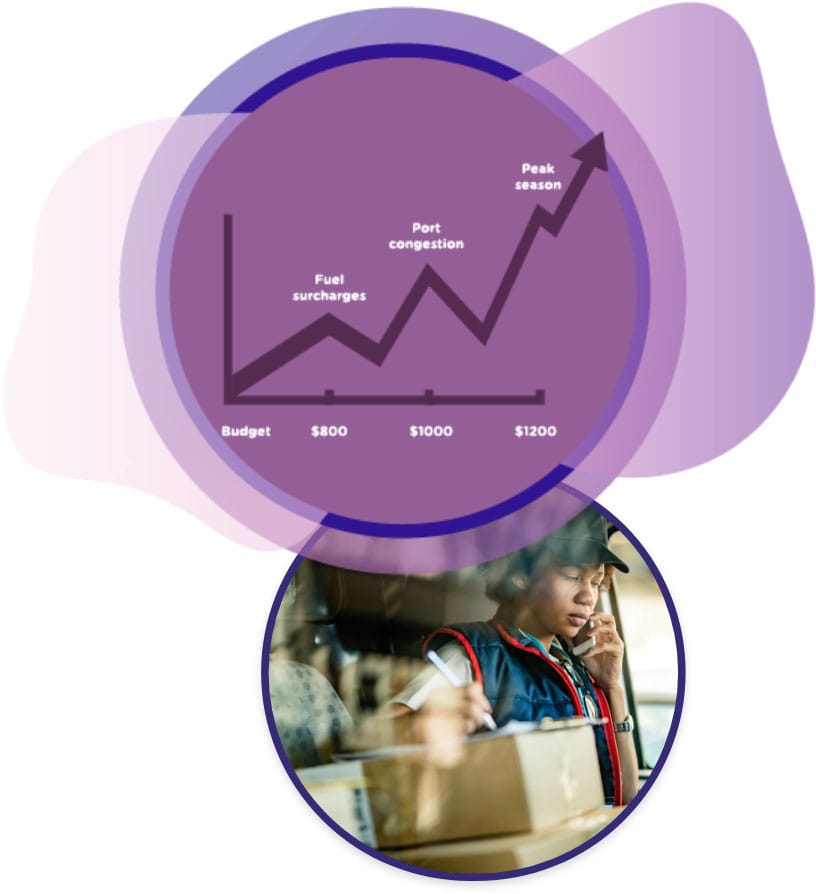
The number one cost to keep in mind actually isn't that hidden (or so you'd think.) Unfortunately, freight costs for international shipments can vary wildly and the price you're given upfront for global shipping isn't always the price you'll pay. Here are some of the reasons your final commercial invoice for international shipping services might be higher than what you initially anticipated:
It is not uncommon for brands to budget $800 for freight but end up paying $2,100 because of peak season or DIM weight when they ship internationally.
Cost #2 — Duties, Tariffs & Customs Forms Fees
The second hidden international shipping cost for packaging that often gets forgotten about are duties, tariffs, and customs fees. See below for some of the more common fees that fall into this category, plus an explanation of each to help determine if these international shipping costs relate to you:
Country of origin tariffs- Import taxes that vary based on important information, like the product's manufacturing country, not necessarily where it ships from or its destination country, significantly affecting global shipping costs and trade policy application.
Formal entry fees- A mandatory charge for sending packages, like the U.S. Customs Merchandise Processing Fee (MPF) for processing commercial imports valued above a certain threshold.
Custom brokerage fees- A charge by a licensed professional or courier (like UPS/ FedEx) for handling the complex process of clearing imported goods through a country's customs. This fee covers paperwork, duty/tax calculation and payment, and coordination with authorities.

Agricultural or FDA inspection fees- These fees vary widely by service, commodity, and agency, and cover the import/export certifications, grading, and facility reinspection.
Delays causing additional charges- Both expected and unexpected delays can cause additional charges in the form of storage fees.
Cost #3 — Quality Control Failures (The Most Expensive Hidden Cost)
Issues with packaging quality control is where the real costs explode. From not choosing the right packaging materials to skipping the QA process to save time and resources, here's all the things that can go wrong with your order, impacting the final amount of your commercial invoice:
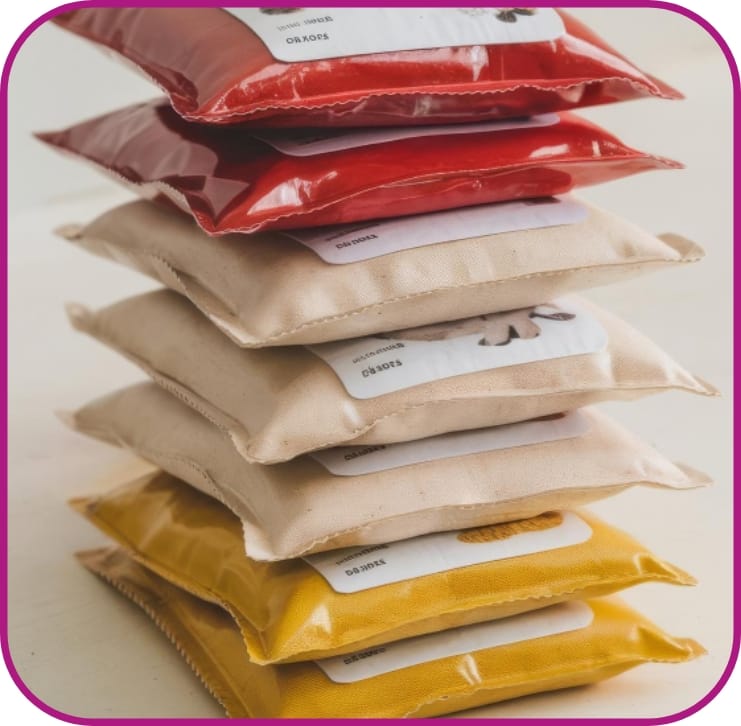
Remakes, replacements, and emergency domestic runs caused by these packaging issues often cost 2-5x more than if you would have purchased the packaging in your home country. Don't create more problems for yourself by outsourcing critical things like your packaging. For example, our client had to overnight 5,000 replacement bags because their overseas shipment arrived with broken zippers - the replacement fees ended up costing more than the entire original order.

Cost #4 — Extra Sample Rounds & Reproofing Fees
This is one item that most brands don't plan for and one that can have extremely high costs is those associated withe extra sample rounds and reproofing fees. For example, samples that don't match production may require resampling, artwork that's misunderstood can lead to more proof cycles, color drift can cause more ink drawdowns, and each one of these has its own fees and time delays.
This is one area that's extremely difficult to plan or schedule for as well. You may not even encounter these with the right shipping service, but with the wrong one, this can be extremely messy, complicated, and expensive.
Cost #5 — Incorrect Sizing or Packaging Material Specs (And the Domino Effect)
Packaging mistakes rarely stay contained. A small miscalculation in sizing or materials on a form can quietly trigger a chain reaction of operational and financial costs that compound over time.
We’ve seen this play out in the real world. In one case, a founder ordered 20,000 bags that couldn’t be used at all because a vendor made assumptions about material layering instead of validating the specs. What looked like a simple packaging order turned into a costly delay, a full reorder, and lost momentum at a critical stage of growth.
When packaging specs are wrong, the cost isn’t just the bags—it’s the wasted inventory, higher logistics spend, missed timelines, and avoidable stress on the business.

Cost #6 — MOQ Waste & Inventory Loss
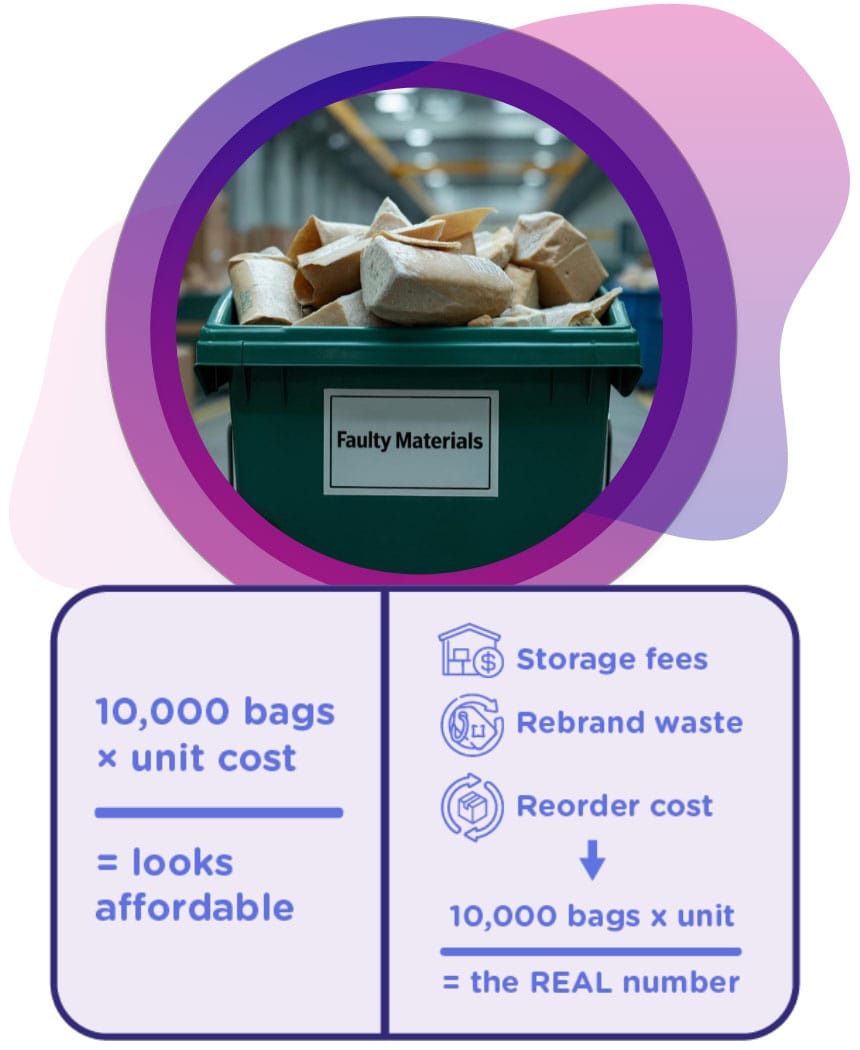
High minimum order quantities—especially from overseas vendors—can lock brands into major financial risk long before a product is fully validated. What looks like a “better unit price” on paper often creates hidden costs that surface months later.
We’ve seen brands launch strong, only to realize six months in that their positioning needed to change. In one case, a rebrand made sense strategically—but it also meant scrapping $12,000 worth of unused bags that could never be recovered or repurposed.
When MOQs are too high, packaging stops being a flexible tool and becomes a sunk cost. The risk isn’t just overordering—it’s paying multiple times for packaging that should have evolved with the business.
Cost #7 — Delays (The Silent Profit Killer)
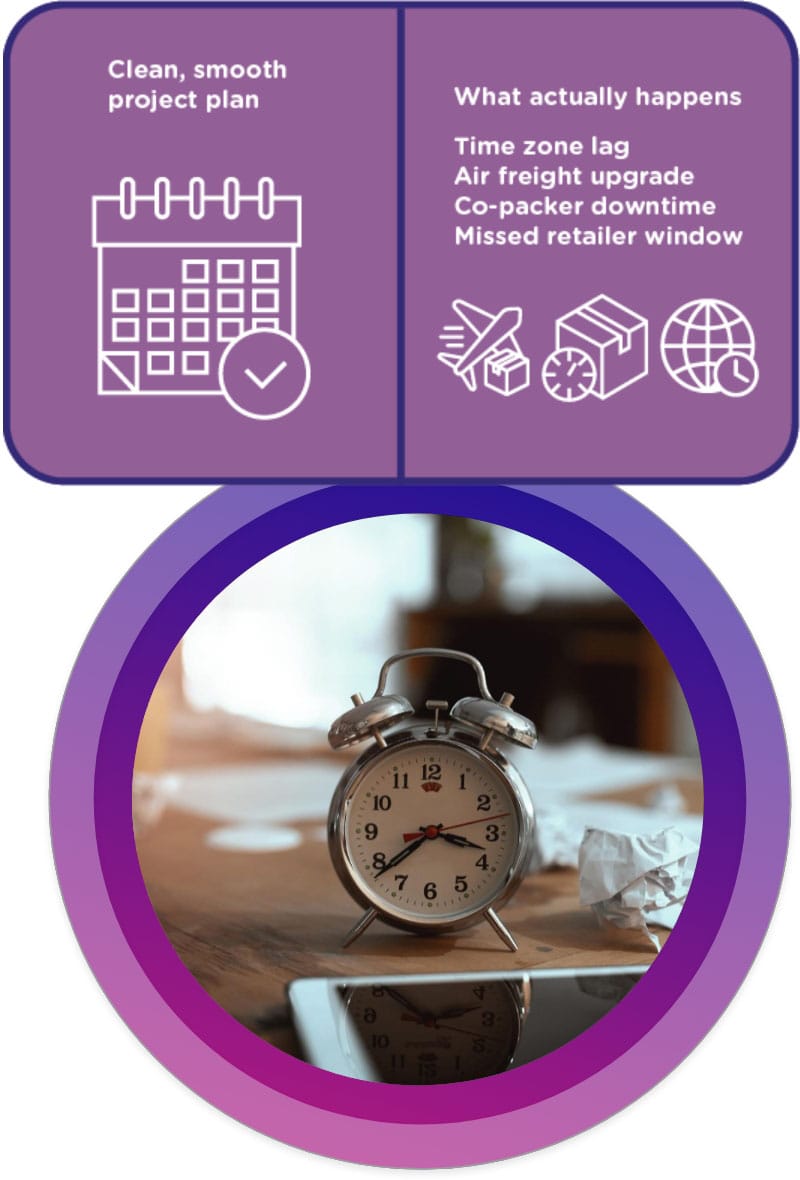
Delays are the most underreported—and often the most financially painful—hidden cost in packaging and production. They don’t always show up as a single line item, but they quietly erode margins across the entire operation.
Individually, each delay may seem manageable. Combined, they create a compounding effect that stalls growth, strains cash flow, and pushes teams into reactive, expensive decisions.
When timelines slip, the real cost isn’t just time—it’s lost revenue, higher logistics spend, and opportunities that don’t come back.
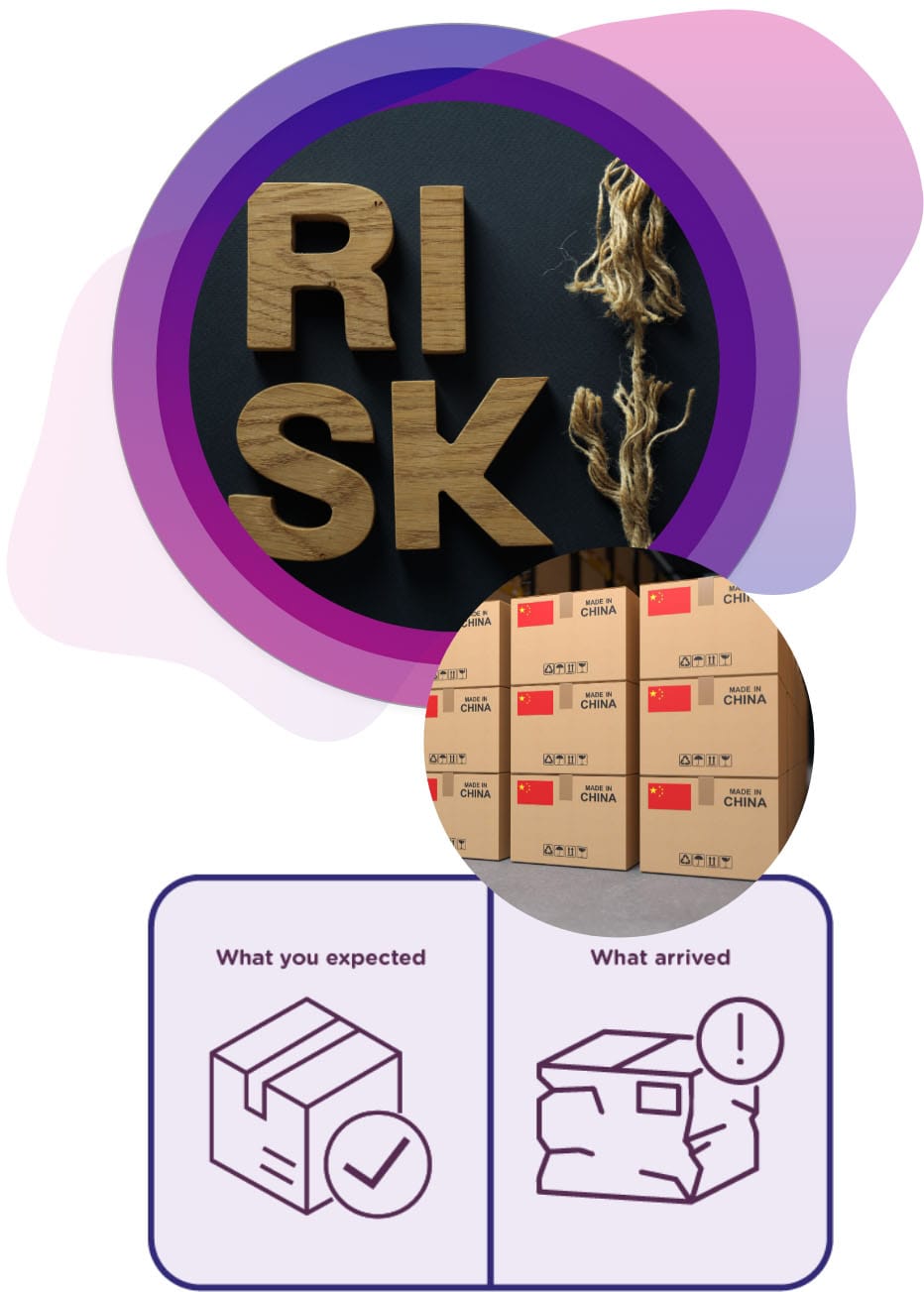
Cost #8 — Lack of Accountability & Zero Recourse
When something goes wrong with overseas packaging vendors, brands often discover there’s little to no real accountability—and even less recourse. The risk doesn’t just lie in the mistake itself, but in who ultimately absorbs the fallout.
We’ve seen situations where a founder flagged a clear misprint, only to be told it was “close enough”—and then watched communication from the supplier slow to a stop. With no leverage, no refund, and no timeline for correction, the brand was forced to move forward at their own expense.
Without accountability, mistakes don’t just cost money—they cost momentum. And in fast-moving consumer brands, lost momentum can be harder to recover than lost dollars.
When Overseas Isn’t Worth It: The True Cost Comparison
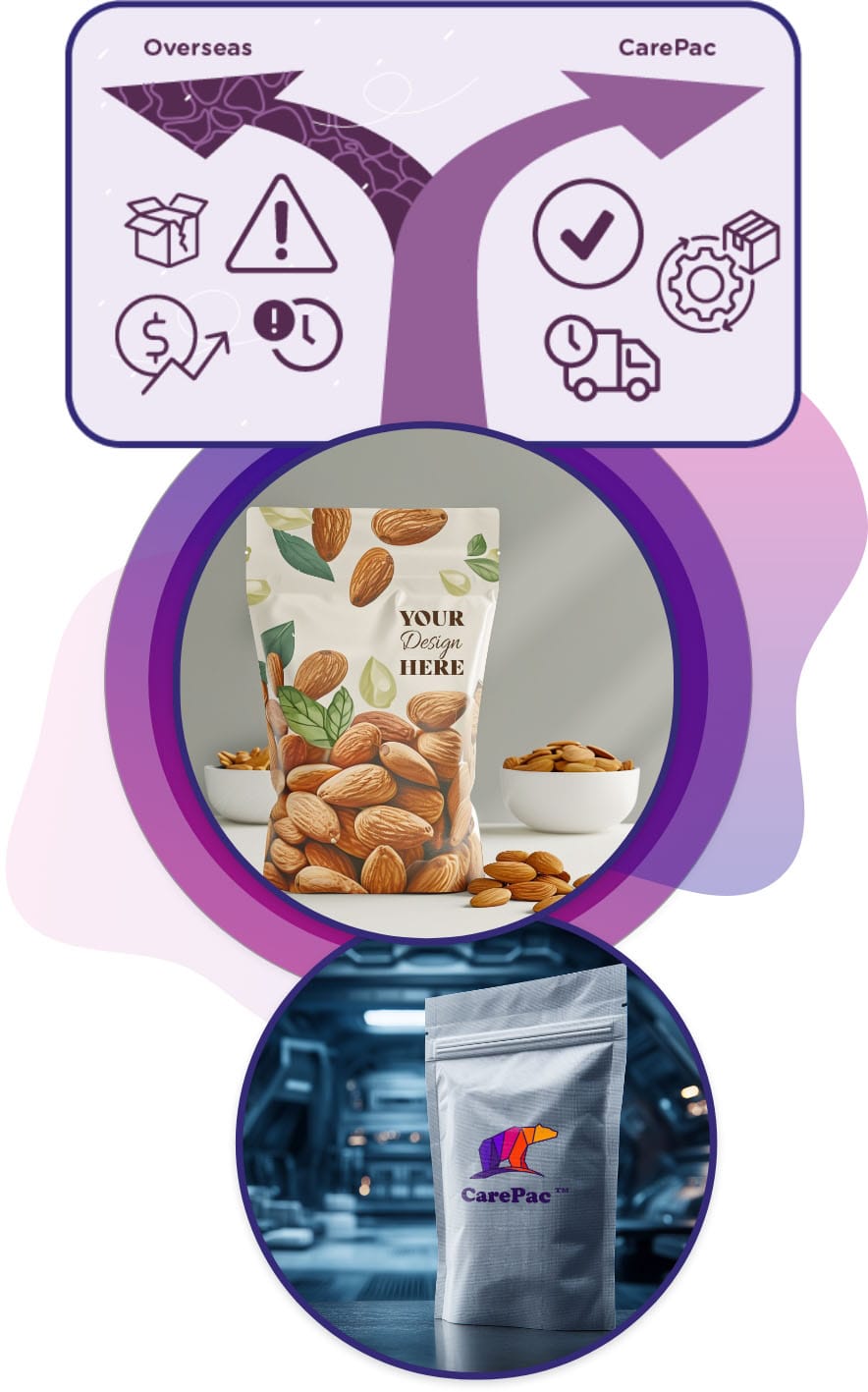
At first glance, overseas packaging looks cheaper. The unit price is lower, the quotes are attractive, and the savings feel obvious. But unit price alone doesn’t reflect total cost—or total risk.
Overseas vendors:
Low unit price
High hidden costs from mistakes, delays, reprints, storage, and freight upgrades
Long lead times with limited accountability
Higher operational and financial risk absorbed entirely by the brand
CarePac:
Higher unit price
Predictable total cost with fewer surprises
Faster timelines and real accountability
Lower overall risk and better control as your business evolves
When you factor in errors, delays, reprints, and lost momentum, overseas packaging often ends up costing more—not just in dollars, but in time, cash flow, and missed opportunities.
The real question isn’t “What’s the cheapest bag?” It’s “What’s the lowest-risk way to scale?”
How CarePac Helps You Avoid These Hidden Costs
If you’ve dealt with packaging surprises before, you already know the damage they cause—missed timelines, wasted spend, and unnecessary stress. CarePac exists to remove those variables, not introduce new ones.
Our company works as a transition partner for growing brands that want clarity, control, and fewer “unknowns” as they scale.
You’ve already dealt with surprises. This is how you eliminate them.
Want clarity around your packaging costs? Contact us today to learn more.
FAQs: International Shipping Costs
If you still have more questions about whether or not to ship internationally, here are some frequently asked questions our business receives from our customers.
Lets Get Started

Made In
The USA

Full Pouch
Customization

Scalable Printing
Digital & Plate
Latest From The Blog
© 2025 CarePac. ISO 9001:2015 CarePac, Family Owned Flexible Packaging
Legal | Capabilities | Privacy